.oO(Pacific Dubia)Oo.
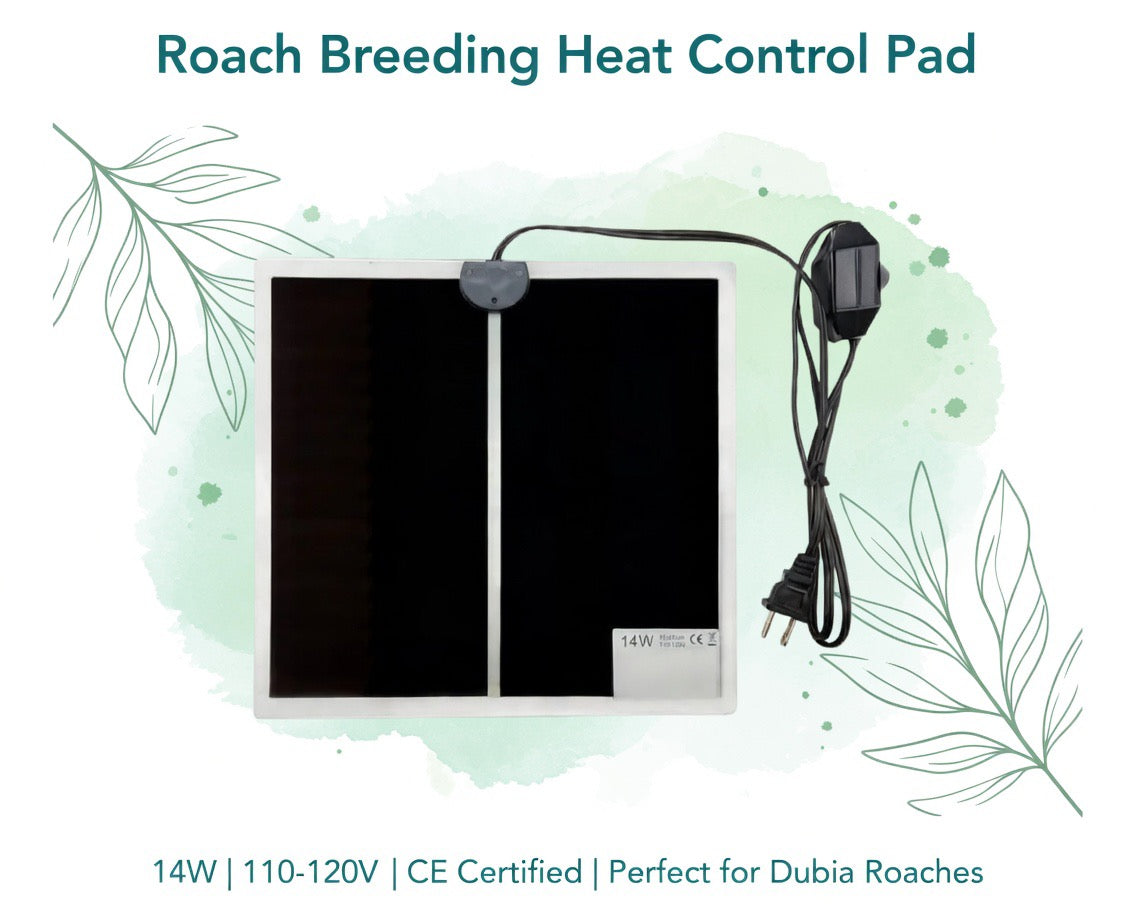
Roach Breeding Heat Control Pad Add-On
Roach Breeding Heat Control Pad Add-On
Couldn't load pickup availability
Dubia roaches thrive and breed most productively in warm conditions, with optimal breeding temperatures typically ranging from 80–90°F. They can survive at cooler room temperatures, but breeding slows dramatically or stops below about 80°F.
Add this Heating Pad to your order as a simple, effective way to boost the ambient heat inside your breeding bin—especially useful during cooler months or in spaces where room temperature falls short of ideal levels.
This reptile-safe under-tank heating pad (or similar add-on mat) attaches easily to the bottom or side of your bin, providing gentle, consistent warmth to create that tropical-like environment Dubia roaches love for faster growth, higher nymph production, and overall colony success. Pair it with good ventilation, humidity around 60%, and proper nutrition for best results.
Upgrade your setup today and watch your Dubia colony multiply!
Best Practices for Using the Roach Breeding Heat Control Pad
- Mount on the side of the Breeding Bin - Attach the pad to the outside of one side wall (using heat-resistant tape like HVAC/silver foil tape if needed). This provides even, gentle warmth without direct bottom contact, reducing risks to the bin or floor.
- Start at a very low temperature - Begin with the pad on its lowest setting (or minimal contact if adjustable). Dubia roaches thrive at 85–95°F inside the bin, avoid jumping straight to high heat.
- Check temperatures often to dial it in - Use digital thermometer as a general guide, but note that it is only the temp at the surface. Monitor multiple times daily at first, then daily.
- Allow airflow around the heat pad - Ensure the pad isn't fully covered, pressed against walls, or blocked. Good ventilation prevents overheating buildup, leave space around the setup and maintain drilled holes/mesh lid on the bin.
- Use good judgment based on weather - Remove or unplug the pad during warm weather (when room temps are consistently 75°F+). Use it primarily when cold to maintain breeding-optimal temps without overdoing it.
- Be aware of potential surface discoloration - Heat from the pad can cause faint marks, discoloration, or scorching on carpet, wood, plastic, or other surfaces over time (even at low wattage). Place the bin on a non-sensitive surface, use a barrier (like tile or foil insulation under the bin if needed), or elevate slightly for better dissipation.
- General safety tips - Plug directly into a wall outlet; never leave unattended initially; inspect the pad regularly for wear; unplug if any unusual warmth/smells occur. Always prioritize roach safety, provide a cool side for them to escape if too warm.
Following these steps keeps your colony healthy and breeding productively while minimizing risks. Side mounting is a popular, effective method among Dubia breeders for low-wattage pads like yours. If temps are hard to stabilize, consider adding a simple rheostat for finer control in the future.
Share